
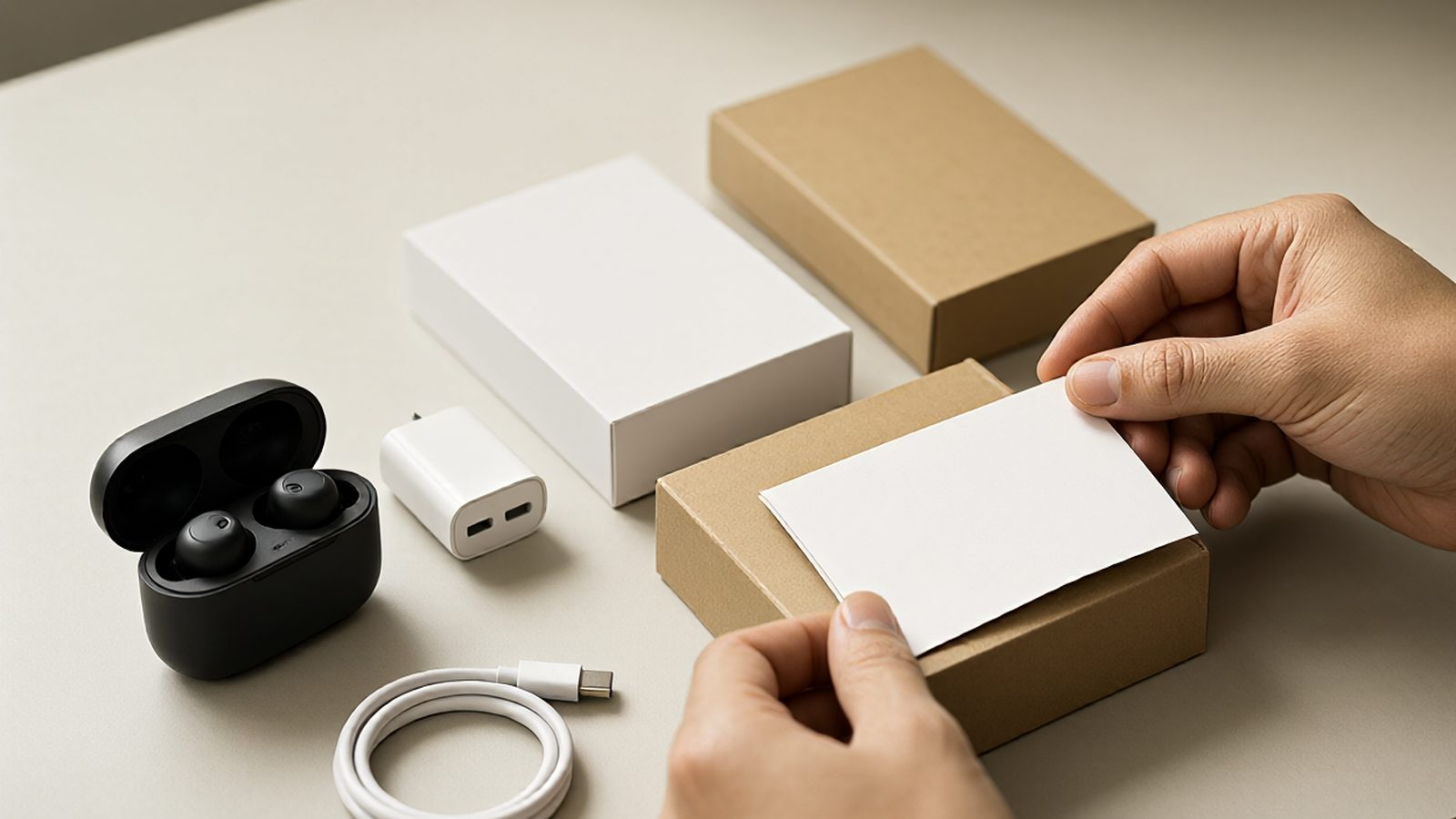
Treat packaging as part of the product specification
For private-label electronics, packaging should be planned alongside the product rather than after it. The retail box, outer carton, product label, manual and digital product listing all need to identify the same model and present the same supported information. A packaging brief gives designers, buyers and factories one controlled reference.
Start with the target channel. Retail shelves, e-commerce fulfilment and distributor cartons each have different practical needs. Define the desired brand hierarchy, product name, variation naming, product images, accessory list, language requirements and protective packaging before artwork begins.
Control the brand assets and artwork versions
Provide approved logo files, colour values, typography rules and brand placement requirements in a shared asset folder. Avoid recreating a logo from screenshots or asking generative tools to render brand text. Use the approved HousePlus logo asset as a deterministic overlay when branded imagery is produced, so spelling, proportions and colours remain correct.
Name every artwork version and keep a sign-off record. The final approval should identify the model, colour or variant, carton size, languages and print files. If artwork changes after approval, create a new version rather than silently replacing a file. This protects repeat-order accuracy.
Review labels, manuals and imagery for consistency
The product label, manual and packaging must agree on the model identifier, included accessories, basic instructions and any required market information. Claims about compatibility, charging, performance or certification should only be used when supported for the exact product. Ambiguous claims can create customer-service and compliance problems after launch.
Product imagery should accurately reflect the shipped item. A scene image can help explain use, but it should not change the product design, connectors, included accessories or performance. If AI-assisted imagery is used, retain the real product photo and add a small review process before publishing the final asset.
Create a reusable launch pack
A launch pack can include the approved product photos, branded scene image, packaging renders, logo files, approved specifications, manual, product labels, carton dimensions and listing copy. It gives sales, marketplaces and distributors a single current source instead of different teams circulating unverified assets.
HousePlus can discuss private-label packaging and presentation options for electronics and accessories. Product configuration, artwork scope, documentation and order terms are confirmed for each project before production.
Demandez un devis de gros à HousePlus
Contactez notre équipe pour discuter des exigences produit, des capacités OEM/ODM, de la documentation applicable et des conditions du devis.
Contacter HousePlus