
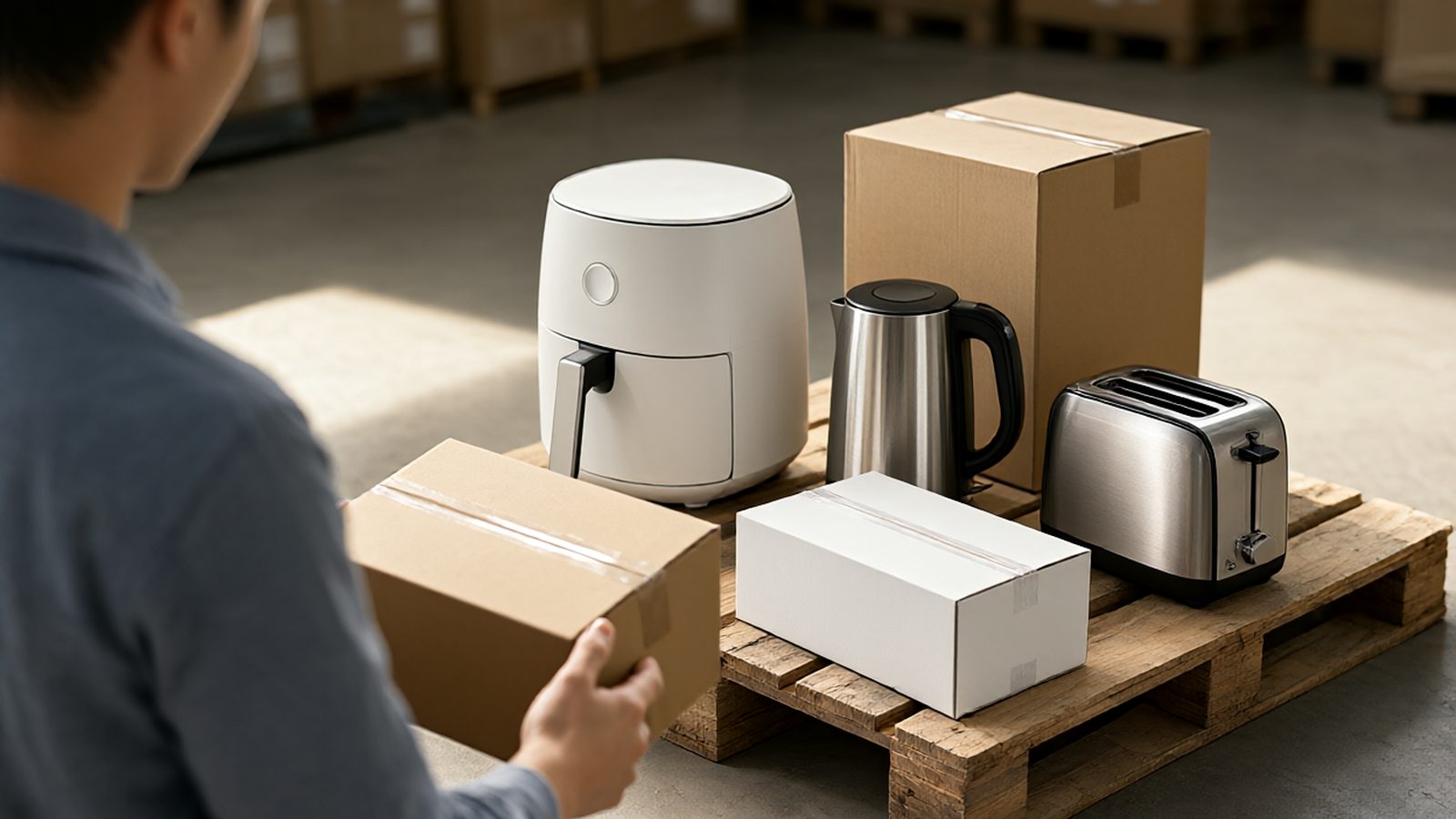
Choose one launch problem to solve
A new private-label appliance range should start with a clear customer problem, channel and price position. Rather than launching many loosely related products, define the first product group around the buying behaviour of a retailer, distributor or online channel. Consider the expected customer, product use, country, warranty handling and the category in which the brand needs to compete.
This discipline keeps the product brief useful. It also helps determine whether a stock platform with custom packaging is sufficient or whether the product itself needs modification. A small, well-documented initial range is often easier to approve, stock and support than a large catalogue with inconsistent presentation.
Write a product brief that a factory can quote
Include the product category, key functions, market, brand treatment, visual direction, packaging language, accessories, expected order quantity and required documents. If there are reference products, identify the parts that are relevant without copying another brand’s protected design or claims. A factory needs a clear scope to identify what can be supplied as standard and what requires engineering or sourcing changes.
Use a versioned approval file. It should show the final product configuration, colour, label placement, carton artwork, manual language and any approved product photography. This file becomes a more reliable reference than a collection of messages when repeat orders or new team members are involved.
Manage labels, manuals and packaging as compliance assets
Packaging has a commercial and operational role: it explains the product, protects it in transit and carries the markings required for the intended market. Review the outer carton, retail carton, product label and manual together. Confirm the language, model reference, importer details where applicable, safety information and recycling or regulatory markings with the buyer’s market adviser.
Avoid placing performance, certification or sustainability claims on packaging until the exact wording and supporting evidence have been approved. This is especially important when a product is sold through multiple countries under the same artwork. A documented artwork-signoff process limits expensive carton rework.
Prepare for a repeatable launch, not a one-time shipment
The launch record should include the approved sample, product specification, artwork, bill of materials where relevant, quality checks, packing details, order references and the final document set. It gives the buyer a repeatable baseline for replenishment and for investigating a return or customer question.
HousePlus can discuss product and packaging options for home-appliance wholesale and private-label programmes. Product availability, customisation scope, documents and commercial conditions are confirmed for each model and enquiry.
اطلب عرض أسعار بالجملة من HousePlus
تواصل مع فريقنا لمناقشة متطلبات المنتج وقدرات OEM/ODM والوثائق المطلوبة وشروط عرض الأسعار.
تواصل مع HousePlus